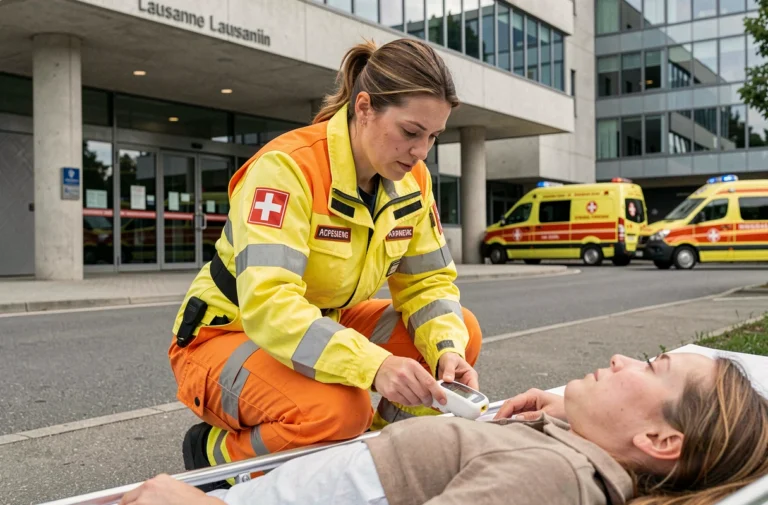
Geriatrics is not limited to the medicine of those over 65 years old. It is a discipline based on a logic of global assessment, where each therapeutic decision takes into account all pathologies, functional capacities, and the patient’s living context. In France, the aging population is pushing hospital and outpatient structures to rethink their care pathways, with recent experiments redefining the role of geriatric assessment in the healthcare system.
Standardized geriatric assessment: what a complete evaluation really covers
The standardized geriatric assessment (SGA) forms the foundation of all geriatric care. It is not limited to a classic clinical examination. The assessment covers several dimensions in parallel: cognition, fall risk, polypharmacy, nutritional status, autonomy in daily activities, and the situation of caregivers.
Since 2024, several university hospitals and regional health agencies in France have been experimenting with geriatric day hospitals that concentrate this assessment into a single day. The patient goes through a series of coordinated consultations (fall assessment, cognition, medication review, autonomy evaluation, meeting with caregivers) instead of multiplying appointments over several weeks.
The initial feedback from these systems shows a significant decrease in emergency room visits among patients referred to these day hospitals. The idea is not to replace full hospitalization but to identify at-risk situations in advance to avoid preventable hospitalizations. The principles of geriatric care rely on this ability to anticipate rather than react in emergencies.
Four concrete priorities for care adapted to the elderly
A recent framework, published in French in 2022 by Swiss institutions (Swiss Academy of Humanities and Social Sciences, CHUV), structures geriatric care around four applicable axes in all services, not just in specialized units.
- What matters to the person (What matters): identify the patient’s preferences, life goals, and accepted limits before defining a care plan. This requires a structured interview, not just a simple question asked in passing.
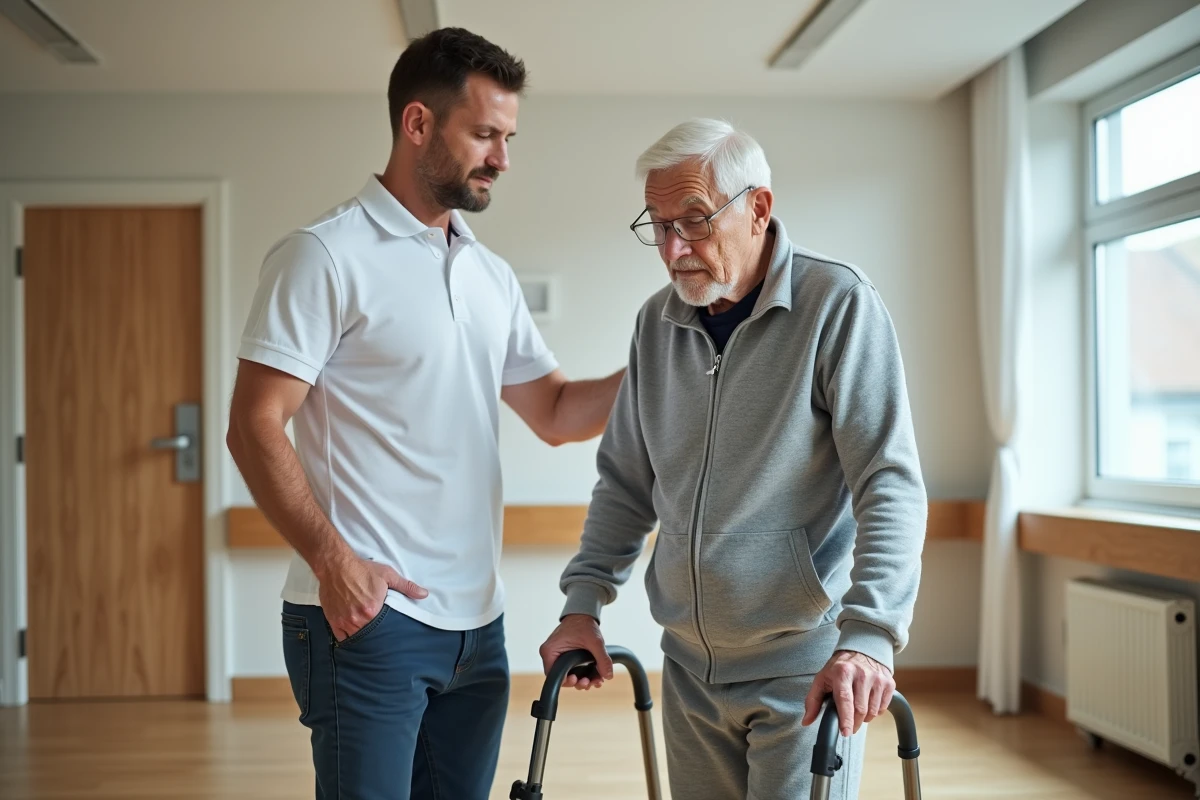
- Daily mobility: assess and preserve the ability to move, stand, and walk. Loss of mobility during hospitalization often accelerates dependence in seniors in an irreversible way.
- Appropriate medications: systematically review prescriptions to eliminate inappropriate ones. Polypharmacy remains one of the leading factors for falls and confusion among elderly patients.
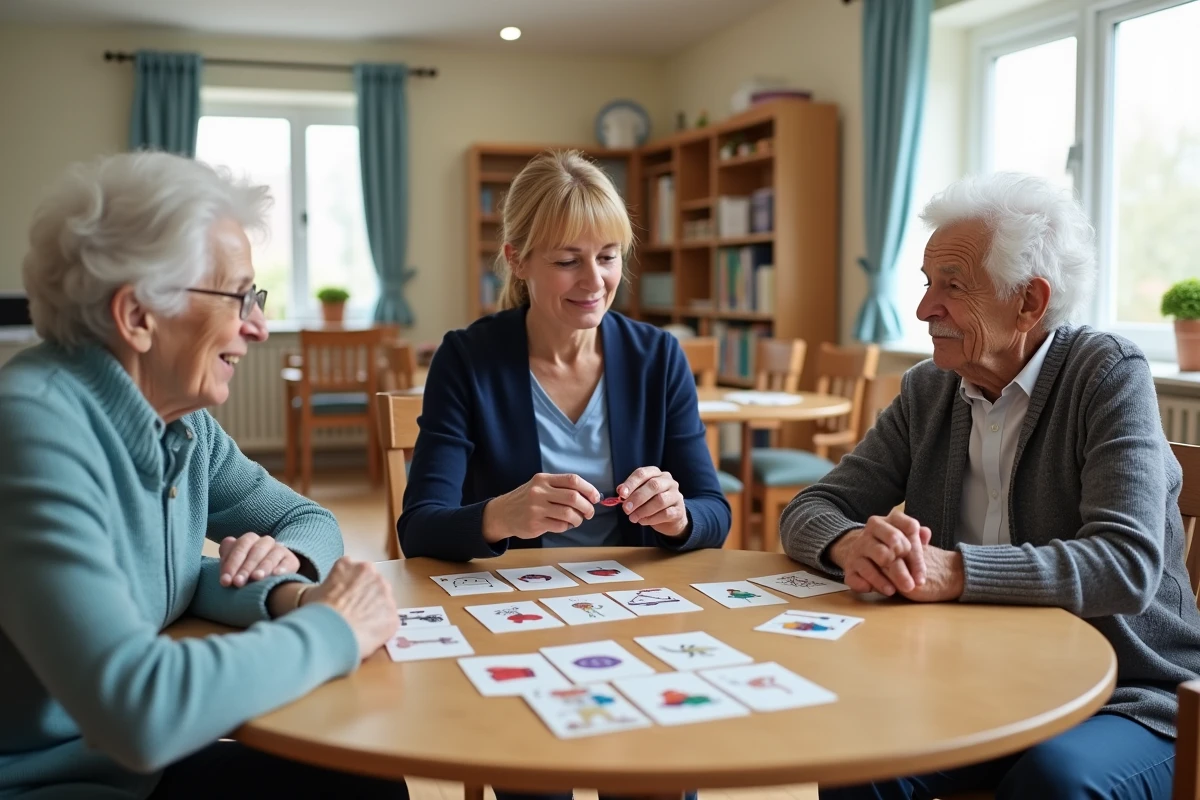
- Mental state: screen for depression, acute confusion (delirium), and early cognitive disorders. These disorders are underdiagnosed outside of geriatric services.
This model of “age-friendly health systems” does not require massive additional resources. It requires a reorganization of existing practices and targeted training for teams.
Training in geriatrics: a gap between needs and staffing
Geriatrics remains one of the least chosen medical specialties by interns, even as demand continues to grow. This gap poses a structural problem. Healthcare professionals in nursing homes, in outpatient medicine, or in emergency services often face complex elderly patients without always having the basic geriatric skills.
The good practice guide for care in nursing homes, published by the General Directorate of Health, the General Directorate of Social Action, and the French Society of Geriatrics and Gerontology (SFGG), emphasizes that staff training is a key lever for the quality of support. The required knowledge goes beyond technical care: it includes managing delirium, communicating with disoriented patients, and coordinating with families.
Field feedback varies on this point. Some facilities have implemented continuing education programs with reference geriatricians. Others operate with teams where the majority have never taken a specific module in geriatric medicine. The available data do not allow for precise measurement of the quality of care gap between these two configurations, but the signals converge towards a net benefit from training.
Coordination between services: the weak link in the geriatric pathway
The geriatric pathway in France relies on a set of structures (memory consultations, short-stay geriatric units, follow-up and rehabilitation care, nursing homes, mobile teams) that are supposed to function in a network. In practice, coordination between these links remains fragmented.
A patient hospitalized after a fall may go through the emergency room, an orthopedic surgery service, and then a rehabilitation service, without any global geriatric assessment being conducted between these steps. Recent work in intensive care shows, however, that applying basic geriatric principles (fragility assessment, delirium prevention, medication review) improves outcomes even outside dedicated services.
Mobile geriatric teams represent a partial response to this problem. They intervene in non-geriatric services to provide occasional expertise. However, their deployment remains uneven across territories, and their effectiveness directly depends on the willingness of receiving teams to integrate their recommendations.
Support for seniors in France faces less of a lack of scientific knowledge than a failure to disseminate and apply that knowledge. The tools exist: standardized geriatric assessment, the four priorities model, mobile teams, geriatric day hospitals. The main barrier remains organizational. As long as geriatrics is perceived as a last-resort specialty rather than as a foundation of transversal skills, the care pathways for elderly individuals will retain their blind spots.