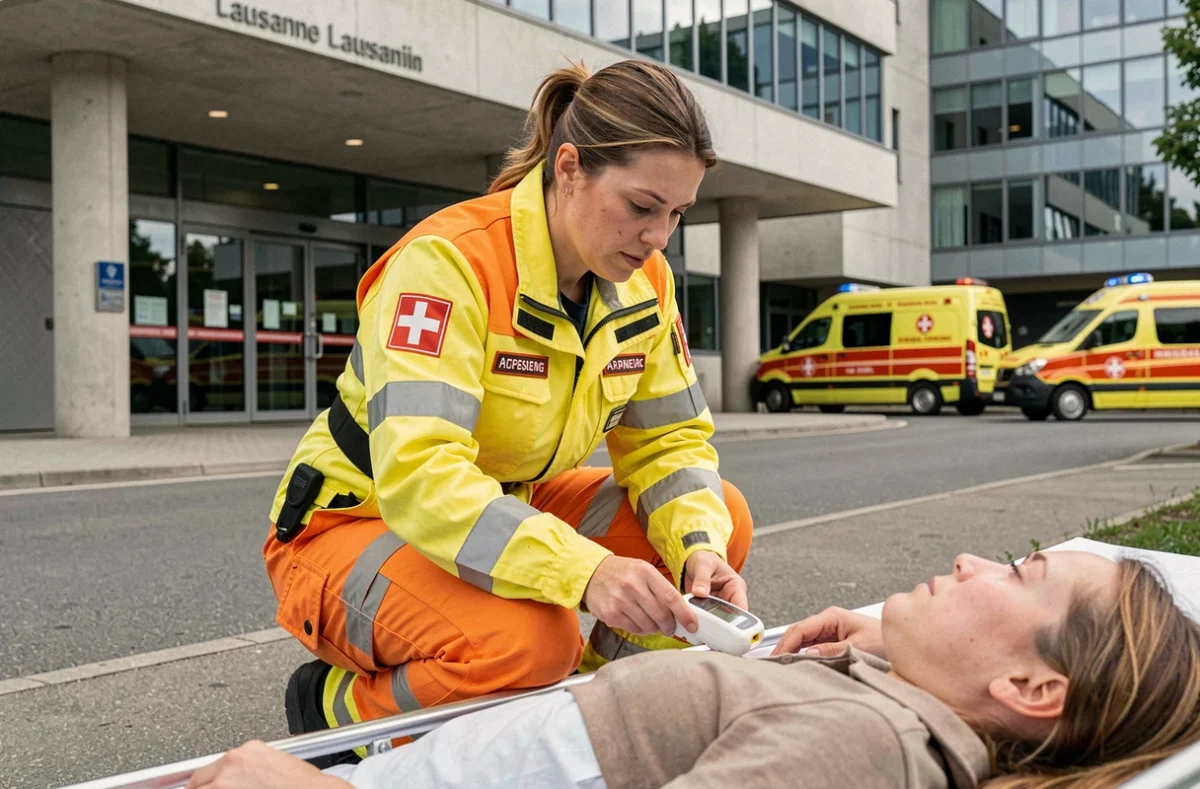
The canton of Vaud has a dense network of healthcare resources, but it is underutilized by a significant portion of the population. Understanding the hierarchy of Vaud’s emergency services helps avoid unnecessary trips to hospital emergency departments and mobilizes the right resource at the right time.
Vaud Pre-Hospital System: Architecture and Operational Roles
The system is based on a pre-hospital chain structured around the 144 emergency center, mobile health teams, the SMUR, and the Emergency Care Teaching Center (CESU). Each link responds to a specific level of severity.
The 144 center is not just a phone service. The operator applies a triage algorithm that determines in real-time the appropriate response: ambulance, SMUR, or simple redirection advice. When a caller describes chest pain with radiation, the protocol triggers a SMUR response without waiting for the end of the conversation.
We observe that the most common confusion concerns the boundary between 144 and 0848 133 133 (On-call Doctors’ Telephone Center, CTMG). The 144 handles life-threatening emergencies: cardiac arrest, respiratory distress, stroke, severe trauma. Everything else, including persistent high fever or a probable fracture without distress, falls under the CTMG, which directs to the on-call doctor, pharmacy, or an urgent care facility.
Effectively managing health emergencies in the canton of Vaud relies first on this operational distinction, which too many residents are still unaware of.
Medical Urgent Care and On-call Pharmacies: Underutilized Resources in the Canton of Vaud
The Flon Urgent Care Center in Lausanne illustrates the gap between available services and their actual use. Open until 8 PM on weekdays and until 7 PM on weekends and holidays, it absorbs some consultations that would otherwise end up in the CHUV emergency department.
The Vaud on-call pharmacies provide accessible support for common symptoms. They offer advice, direct patients, and dispense certain medications without a prescription, which helps alleviate hospital emergency departments for cases that do not require extensive medical examination.
We recommend establishing a three-tier reflex before any hospital visit:
- Call 0848 133 133 (CTMG) for a free assessment and appropriate guidance, available 24/7, 365 days a year
- Visit an on-call pharmacy for common symptoms (urinary infection, gastroenteritis, minor trauma) that do not require imaging
- Consult an urgent care facility with extended hours, like the Flon, for intermediate situations requiring a clinical examination without life-threatening characteristics
This graduated pathway is not a comfort recommendation. It directly affects the waiting time for those arriving at the emergency department with a serious condition.
Emergency Volume at CHUV: A Structural Pressure, Not Just Seasonal
CHUV handled 99,877 emergencies in 2025, according to its annual report published on September 3, 2026. This figure exceeds the seasonal peaks related to winter viruses. The pressure is constant, fueled by demographic aging, an increase in decompensated chronic conditions, and a shortage of primary care physicians in certain areas of the canton.
The direct consequence: non-life-threatening emergencies experience waiting times proportional to the overall congestion. A patient with a sprain without signs of severity may wait several hours, not due to staff negligence, but because medical triage logically prioritizes life-threatening situations.
Seasonal viruses add a temporary spike to this already high baseline. Each winter, simultaneous epidemics (flu, bronchiolitis, gastroenteritis) saturate capacities for several weeks. The Department of Health and Social Action now communicates in advance of these episodes to encourage graduated access.

Telephone Access to Emergency Numbers: Swiss Regulatory Guarantee
A technical point often overlooked: in Switzerland, telephone providers are legally required to guarantee free access to emergency services from every connection. This provision covers 144 and other emergency call numbers, including from a mobile phone without credit.
In practical terms, a phone without an active subscription can dial 144. We emphasize this point because it conditions responsiveness in extreme situations: a witness to an accident without credit on their prepaid plan can alert the center without technical obstacles.
First Aid Actions and CESU Training in the Canton of Vaud
The quality of the response to health emergencies does not solely depend on the institutional system. The time between the event and the arrival of professional help remains critical, especially for cardiac arrests where every minute without CPR significantly reduces survival chances.
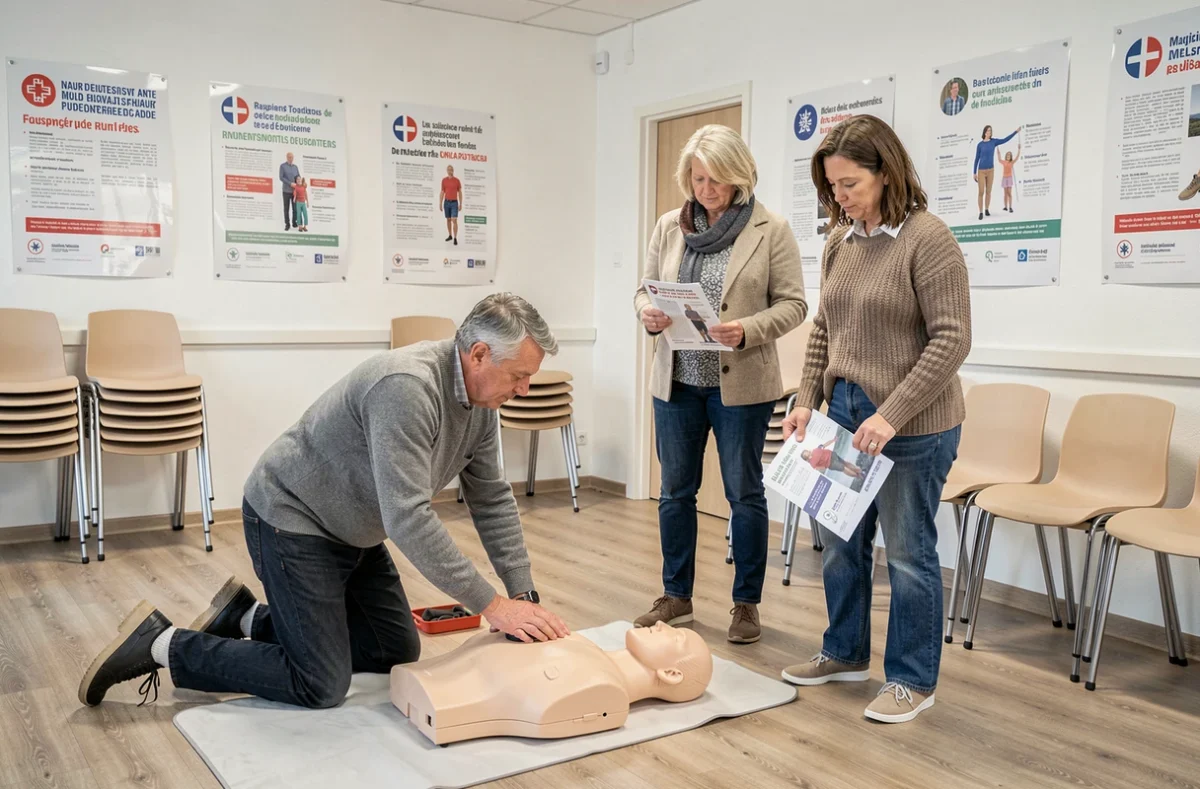
The Emergency Care Teaching Center (CESU) trains professionals and the general public in actions that stabilize a patient while waiting for the SMUR. The sequence of intervention remains the same regardless of the context:
- Secure the scene (remove danger, cut off electrical contact, mark the road)
- Assess consciousness and breathing in less than ten seconds
- Alert 144 by communicating precise location, number of victims, and observed condition
- Begin appropriate actions (recovery position, CPR, hemorrhage control) according to the regulator’s instructions
First aid training remains the most effective individual lever to improve the prognosis of life-threatening emergencies before the arrival of professional teams.
The canton of Vaud has a complete system, from the 144 center to local urgent care facilities. The current challenge is not to create new structures, but to ensure that every resident knows the right number to call and the right place to go based on the severity of their situation.