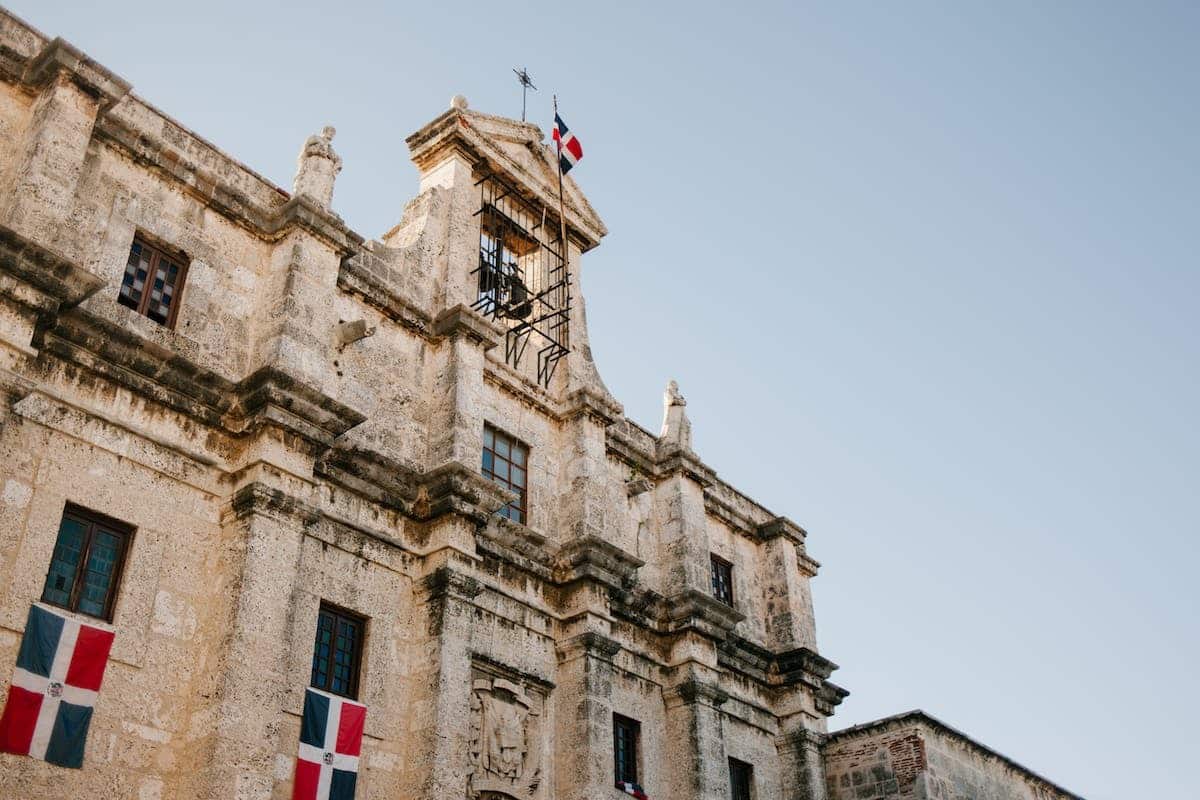
Immerse yourself in the linguistic universe of the Dominican Republic. This country, at the heart of the Caribbean, has a rich and complex official language that is much more than just a means of communication. Indeed, Dominican Spanish is a true window into the history and culture of this country. It is a fascinating blend of several influences, including indigenous languages, colonial Spanish, and other foreign languages. Playing an essential role in national identity, this language offers valuable insight into the traditions, beliefs, and way of life of Dominicans. Explore this cultural richness without further ado!
The ‘Dominican Republic language‘ is a fascinating and rich topic. The official language of the Dominican Republic is Spanish, but this Spanish version has a unique flavor that cannot be found elsewhere in the Spanish-speaking world. It is thanks to the influence of indigenous languages like Taíno and Arawak that this particularity has formed, enriching the Spanish vocabulary with commonly used terms such as ‘yuca’ (cassava) or ‘tabaco’ (tobacco).
Spanish in the Dominican Republic has a distinctive sound that reflects the musical rhythms of the country. This specific musicality permeates every conversation and gives everyday speech a characteristic melody.
Talking about the ‘Dominican Republic language’ also means discussing an incredible cultural richness. The local expressions bear witness to a very strong historical heritage, carrying ancestral traditions and deeply rooted sociocultural values in the collective consciousness.
Far from being static, the Dominican Republic language continues to evolve while maintaining its deeply rooted linguistic roots. Even today, despite successive waves of globalization and the massive introduction of tourism on the island, Dominicans remain attached to their mother tongue.
Discovering this particular aspect of ‘the Dominican Republic language’ is to dive into a genuinely vibrant cultural universe that draws its uniqueness from its remarkable linguistic diversity.
This offers passionate travelers interested in cultural discovery or simply curious individuals from around the world a valuable perspective to understand the entire sociocultural complexity inherent to this dynamic Caribbean country.
The history of the official language of the Dominican Republic dates back to colonial times when the island was shared between Spanish and French colonizers.
In the 15th century, the first Spanish colonizers arrived on the island and imposed their mother tongue, Spanish. This marked the beginning of a long period of Hispanic influence that profoundly shaped Dominican culture.
It should be noted that this linguistic imposition did not occur without resistance or influence from the indigenous languages already present on the territory. Indigenous populations like the Taínos and Arawaks had their own languages and contributed to shaping the current Dominican vocabulary.
The French colonization also left its mark on the Dominican language. Indeed, for a short period in the 18th century, part of the island was under French control before being reclaimed by the Spanish. This influence is found in some commonly used terms in the Dominican Republic such as ‘madame’, ‘monsieur’, or ‘baguette’.
Over time, this linguistic mosaic has been enriched by migrations from other surrounding countries such as Puerto Rico or Cuba. This has led to a cultural blending where different variants are spoken depending on the regions.
Despite these external influences, Spanish remains predominant as the official language of the country since its independence in 18**4**.
Today, in addition to Spanish, English is also widely spoken in the Dominican Republic, particularly in tourist areas where many foreign visitors come each year.
The official language of the Dominican Republic is therefore not limited to a simple linguistic transmission. It reflects a complex and diverse past that has shaped the cultural identity of the country. This linguistic richness testifies to the heritage of indigenous populations, Spanish and French colonizers, as well as external influences over time.
Exploring the official language of the Dominican Republic is thus akin to embarking on a fascinating journey through time and cultures. It is an invitation to discover this exotic nation from a new angle, appreciating its linguistic diversity as a true cultural richness to explore with curiosity.
In the linguistic landscape of the Dominican Republic, the official language occupies a central place. Indeed, it plays a crucial role in expressing and preserving the cultural identity of the Dominican people.
The official language of this beautiful country is Spanish. It is through this beautiful language that Dominicans tell their stories, share their traditions, and express their worldview. Spanish is much more than just a means of communication: it conveys a whole cultural richness that deserves to be explored and celebrated.
Beyond words, it is through the very use of the Spanish language that the fundamental values of Dominican society are rooted. The warmth characteristic of Dominicans is also reflected in their way of using their mother tongue. Colorful popular expressions, vivid proverbs, and catchy rhythms are all elements that testify to the creative and vibrant spirit of the Dominican people.
Fluently speaking Spanish in the Dominican Republic is a real asset for fully exploring its local culture when traveling or staying in these welcoming lands. By communicating easily with the local inhabitants, one can truly grasp the beauty of musical traditions such as merengue or bachata.
As the primary language in the territory, Spanish in the Dominican Republic is influenced by linguistic contributions from other horizons. Indeed, the historical evolution of the country has favored the introduction of terms and expressions from African, Taíno, or even French languages.
This linguistic diversity present in Dominican culture reinforces its unique character and offers an enriching experience to curious visitors eager to discover these hidden verbal gems.
The official language occupies a crucial place in the rich Dominican culture. It embodies the values and traditions that make the heart of this warm people beat. Speaking Spanish in the Dominican Republic allows one to dive into the heart of a singular identity forged by a complex and abundant history.