
The notion of seven spiritual worlds refers to a model of structuring reality into seven levels of experience, present in several ancient traditions: Hebrew Kabbalah with its seven heavens, Hinduism with the loka, and Sufism with its seven stations of the soul. These levels do not describe geographical places, but rather modalities of everyday experience, ranging from the densest physical plane to increasingly subtle states of consciousness.
Crossed origins of the seven-level spiritual model
The number seven appears in cultures that have had no direct contact. Kabbalah structures reality into seven celestial palaces (heikhalot), each associated with a divine quality. Hinduism describes seven loka, from the earthly plane (Bhur) to the plane of absolute truth (Satya). Sufism, in turn, speaks of seven nafs, the stations the soul traverses in its inner journey.
What is striking is the structural convergence. In each tradition, the first level corresponds to the body and raw sensations. The last touches on a form of union or dissolution into a broader reality. The intermediate levels deal with emotions, intellect, and then forms of perception that transcend ordinary reasoning.
Nineteenth-century Theosophy formalized this model by speaking of seven planes of existence (physical, astral, mental, buddhic, etc.), freely borrowing from Hindu and Neoplatonic traditions. Rudolf Steiner’s Anthroposophy adopted this framework while adding an educational dimension. A detailed overview of these correspondences is available by consulting the 7 spiritual worlds on 100 Pour 100 Annonces, which maps the main associated traditions.
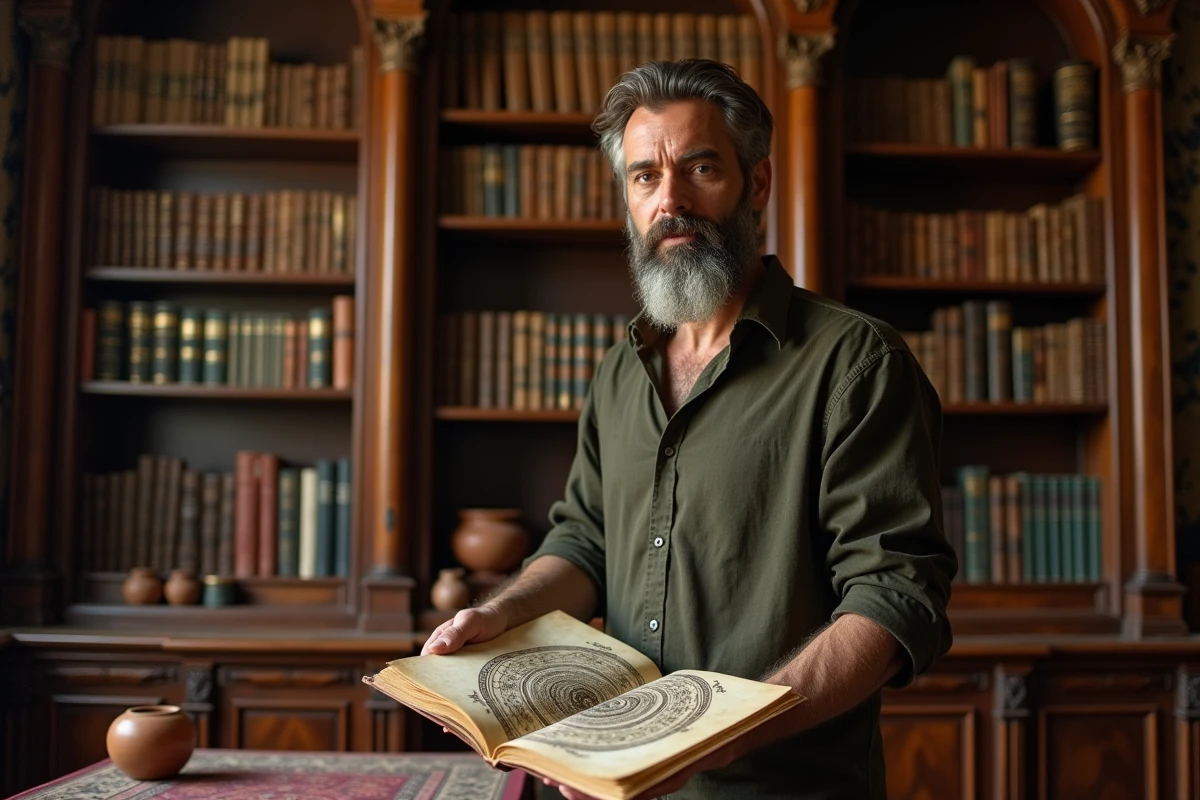
Seven worlds as levels of consciousness, not as invisible floors
In recent years, several Francophone authors of spirituality have shifted the interpretation of these seven worlds. David Dubois, a specialist in Kashmiri Shaivism, and Fabrice Midal, in the Buddhist field, emphasize one point: each world corresponds to a way of inhabiting reality, not to a place separate from everyday life.
This reinterpretation aligns with the work of transpersonal psychology, particularly that of Ken Wilber and Stanislav Grof. Wilber proposes a model of consciousness development in stages, where each level integrates and transcends the previous one. The correspondence with the seven worlds is not mechanical, but the architecture is similar: one moves from a body-centered consciousness to a relational consciousness, and then to forms of experience that Wilber qualifies as “transrational.”
The first world, in this reading framework, concerns survival and physical needs. The second touches on emotions and emotional bonds. The third engages rational thought and will. Beyond that, traditions diverge in vocabulary, but all describe states where the separation between self and the rest of the living begins to dissolve.
What this changes in practice
If the seven worlds are modalities of experience, then the “ascension” from one level to another is not a mystical feat reserved for initiates. It occurs in ordinary moments: a mourning that transforms the perception of time, a meditation that alters the relationship to the body, a relationship that compels one to move beyond purely intellectual functioning.
The journal Christus, in a 2023 issue dedicated to the mysticism of everyday life, highlights this exact point. Spiritual experience does not begin after ordinary life, it is rooted in it. The seven worlds then become a reading map of inner transformations, not a staircase to another realm.
Symbolism of the seven worlds and links with living traditions
Each level carries a symbolism that varies according to the tradition, but certain archetypes recur regularly:
- The lotus, a symbol of spiritual awakening in Hinduism and Buddhism, is associated with the higher levels where consciousness opens beyond the ego. Its growth from the mud to the surface of the water illustrates the journey from the lower worlds to the light.
- The tree of life, present in Kabbalah as well as in Nordic mythologies, represents the vertical axis that connects all levels together. It symbolizes knowledge acquired through direct experience of each plane.
- The eye (or third eye), recurrent in Hindu and Egyptian traditions, marks the threshold where perception exceeds the five ordinary senses, typically located at the fifth or sixth level.
These symbols are not decorative. In meditative practices, they serve as anchors for attention. Visualizing a lotus or focusing on the point between the eyebrows are concrete techniques that, according to these traditions, facilitate the transition from one mode of consciousness to another.
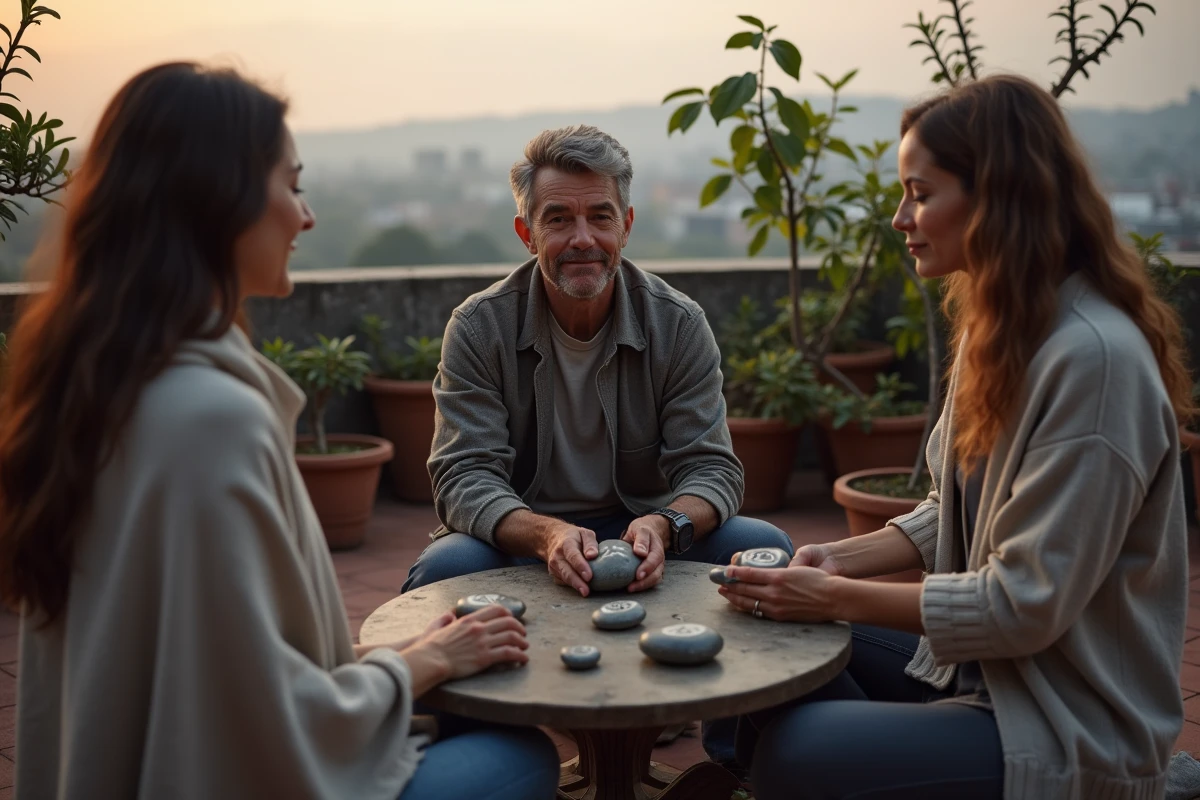
Ecological reinterpretation of the seven spiritual planes
A recent trend deserves attention. Some contemporary masters and theologians link the progression through the seven worlds to a growing responsibility towards the living. The first level concerns respect for one’s own body. The second, relationships with loved ones. The following levels gradually expand the circle of concern: community, human species, other species, future generations, and finally the Earth as a whole.
This reading is not a recent invention imposed on an ancient model. The concept of wisdom in Kabbalah (hokhmah) includes responsibility towards creation. The Hindu loka describe an interdependent cosmos where each level of reality affects the others. Sufism speaks of the tranquil soul (nafs al-mutma’inna) as a state where inner transformation necessarily reflects on the relationship with the external world.
A model of relational consciousness
What emerges from these reinterpretations is a model where spirituality is not an escape upwards, but a gradual broadening of perception. Each world traversed adds a layer of complexity to how a person relates to others and their environment.
The progression is not linear. The traditions themselves describe setbacks, stagnations, and repeated crossings of the same level from different angles. The model of the seven worlds functions less like a staircase than as a spiral where each passage deepens the understanding of the previous level.
The question posed by this millennia-old framework remains surprisingly concrete: at what level of relationship to the living do we find ourselves in our daily choices, and what should we perceive differently to access the next one?